
A six-part series on conflict, state fragility, resource pressure, and the structures that keep turning local crises into regional ones.
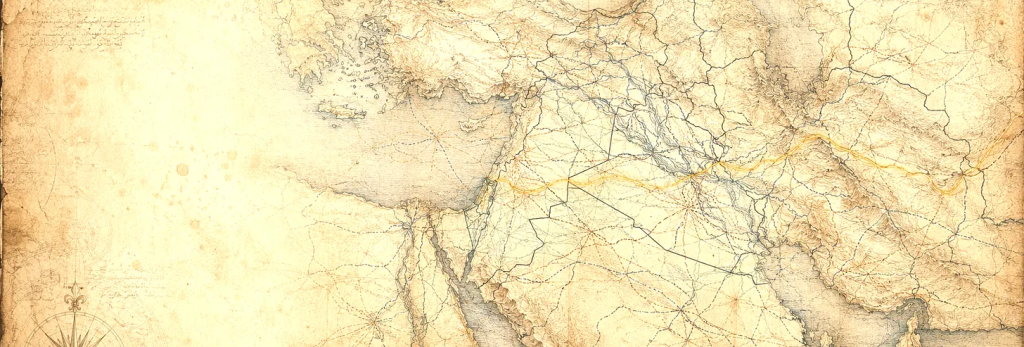
I have traveled through parts of the Middle East: Israel, the West Bank, Jordan, Lebanon, and Dubai. Travel does not make anyone an authority on a region this large or this old. It does make abstractions harder to hold. Borders stop being lines on a map and become roads and checkpoints. Water scarcity becomes a rooftop tank and a delivery schedule. Political fragmentation becomes uniforms, neighborhoods, and the hour the electricity goes off.
This series makes one argument: The Middle East is not a set of separate conflicts. It is one connected system, and its crises keep reproducing each other.
Post 1 of a six-part series on the Middle East as a system.
Start with the question people skip
Most talks about the region begin by asking which “Whose side are you on?” This happens before anyone has asked what actually happened and why. I want to reverse the order. Also, explaining why an actor behaves as it does not mean I endorse it. I plan to keep these things distinct:
- What triggers a conflict is distinct from its structural cause,
- A military outcome is distinct from a political one,
- A government is distinct from the nation it governs, and
- The official line is distinct from public opinion.
Comments are closed, but trackbacks and pingbacks are open.